Commercial Mortice Lock Guide

How Lockwood & Lockton Locks Work (And How to Set Them Up)
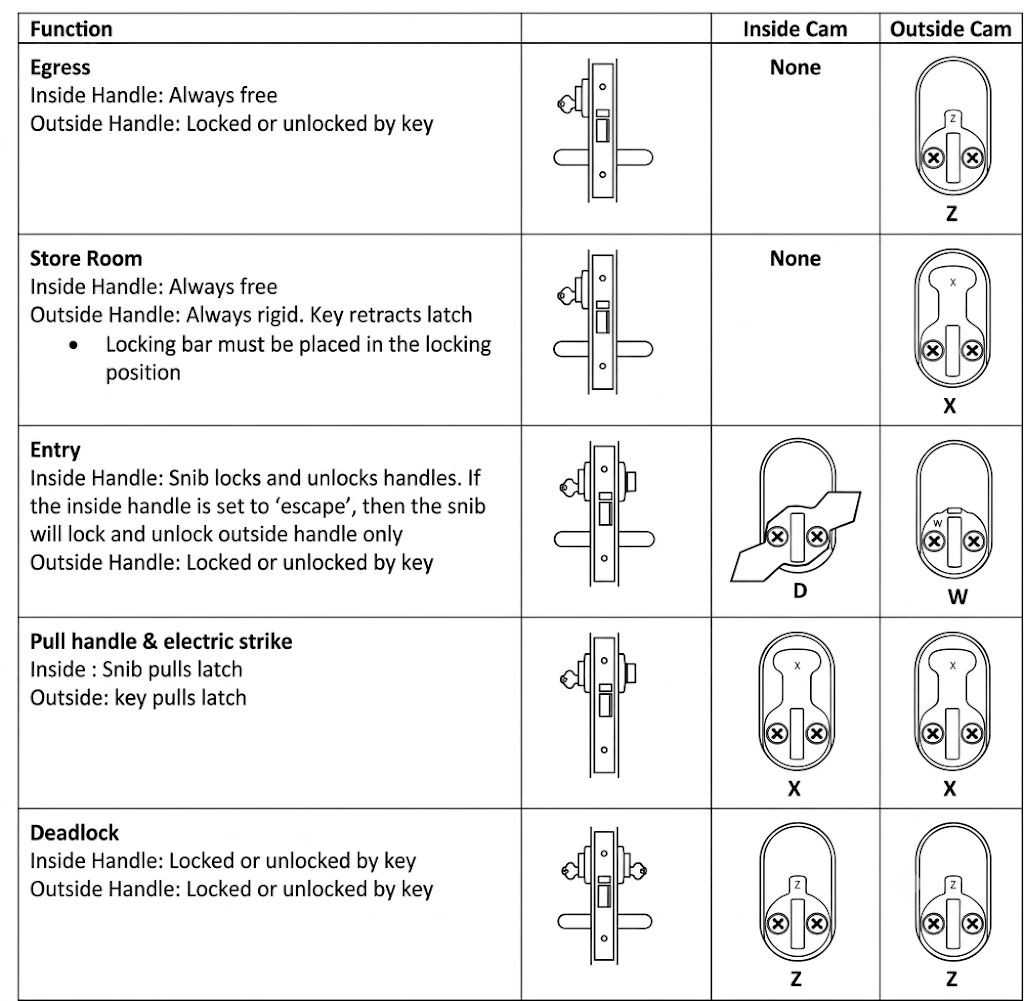
Commercial mortice locks are designed like a "chameleon"—one lock body can be changed into completely different lock types just by adjusting two things:
Which handle is allowed to turn (Handle Hub Setting)
You can choose from:
Side 1 lockable
Side 2 lockable or
Both sides lockable.
What shape of cam is on the cylinder (Cylinder Cam)
The cam determines the function of the key (cylinder)
1. The Core Concept: How Electric Strikes & Egress Work
Understanding how the inside and outside handles behave separately is the key to choosing the right setup.
For example:
OUTSIDE: Locked --> Requires key or electric strike to open
INSIDE: Always unlocked--> Always opens the door for safety or easy exit (Free Egress)
Why Lock the Outside Handle for an Electric Strike?
The Problem: If the outside handle can turn, anyone can push the handle down and pull the door open—completely ignoring your electric strike or access control keypad.
The Solution: You set the lock so the Outside Handle is LOCKED (Rigid) and the Inside Handle is FREE.
How it works:
From the Outside: The handle won't push down. The only way in is when an electric signal releases the strike plate (or you use a physical key).
From the Inside: Someone can push the handle down and walk out instantly (meets emergency fire exit codes).
2. Understanding Cylinder Cams (The Key Interface)
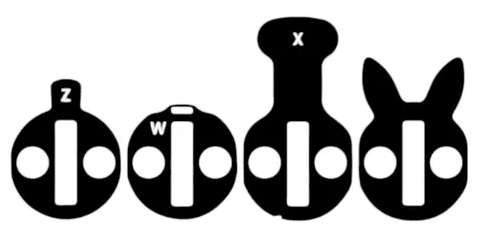
The cam is the rotating metal flag on the back of the oval cylinder. When you turn the key, the cam spins and pushes internal levers inside the lock body.
Standard Cam X: pull handle & Electric strike --> keys pulls latch.
Z Cam: handle can be locked or unlocked by the key.
- Bunny Ear Cam (D / V Cam): Features two distinct ears. Designed for inside snibs/turn-knobs and entry functions to lock the handle by a short 90 or 180 degree turn.
- W Cam (Selector / Auxiliary): A low-profile cam used in specialized electrical or anti-lockout setups.
3. Real-World Scenarios & Setup Matrix
Here is how to set up the lock for the most common commercial installations:
Scenario A: Office / Apartment Entry with Electric Strike
Goal: Secure entry from outside (keycard/intercom or key required). Safe, effortless exit from inside.
Outside Handle: Locked (Rigid)
Inside Handle: Always Free (Escape)
Cylinder Cam: Outside X, inside X
How it operates:
Swipe a card --> Electric strike releases latch.
Use a key --> Key retracts latch directly.
Inside --> Just push handle to exit.
Scenario B: Classroom / Office Door (Selectively Lockable)
Goal: Door functions like a normal passage door during office hours, but can be locked from the outside at night.
Outside Handle: Lockable by Key (toggles between Free and Locked)
Inside Handle: Always Free
Cylinder Cams: Outside Z, inside X
How it operates:
Turning the key in the cylinder locks or unlocks only the exterior handle.
The interior handle always opens the door, locked or unlocked.
Scenario C: Double-Sided Key Lock (Store Door / Perimeter)
Goal: Both handles lock down when the shop is closed.
Outside Handle: Locked by Key
Inside Handle: Locked by Key
Cylinder Cam: Outside z, inside z
How it operates:
Key locks both handles.
Note: Do not use on designated fire escape doors where free egress is required!